David
Clark 1817-1878
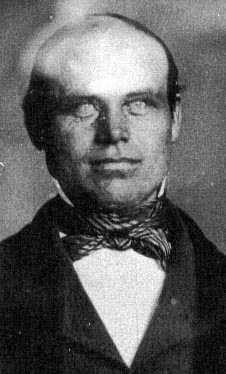 David
Clark was born in Epsom, New Hampshire
May 18, 1817, the fifth child of James
Clark and his second wife, Hannah
Robinson. David Clark attended Epsom
schools, and sometime after 1830,
along with his brother Dustin Clark,
left Epsom for Lowell, Massachusetts.
While there he met, and on May 16,
1839, married Harriet Nevell Wilson
of Dracut. Between 1840 and 1856 they
had children David Franklin, Henry
Dustin, Harriet Augusta, Mary Jane,
John Wilson, Abbie Frances, and Frederick
Newton Clark. Of these children, Henry
Dustin and Mary Jane died young, and
all were probably born at Lowell.
By 1850, David Clark and his wife
were living in Lowell with three children,
his trade as carpenter; also in Lowell
were his brother Dustin with 2 children,
and the mother of Dustin's wife, Betsey
Robinson, with three daughters.
David
Clark was born in Epsom, New Hampshire
May 18, 1817, the fifth child of James
Clark and his second wife, Hannah
Robinson. David Clark attended Epsom
schools, and sometime after 1830,
along with his brother Dustin Clark,
left Epsom for Lowell, Massachusetts.
While there he met, and on May 16,
1839, married Harriet Nevell Wilson
of Dracut. Between 1840 and 1856 they
had children David Franklin, Henry
Dustin, Harriet Augusta, Mary Jane,
John Wilson, Abbie Frances, and Frederick
Newton Clark. Of these children, Henry
Dustin and Mary Jane died young, and
all were probably born at Lowell.
By 1850, David Clark and his wife
were living in Lowell with three children,
his trade as carpenter; also in Lowell
were his brother Dustin with 2 children,
and the mother of Dustin's wife, Betsey
Robinson, with three daughters.
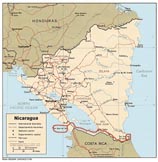
 David
Clark, as did so many others, decided
to seek new fortune in California,
and left the port of Boston for New
York City, and left New York for Nicaragua
at 3 pm, Feb. 5, 1852. In ten days
the ship arrived at Greytown (San
Juan del Norte) on the east coast
of Nicaragua. In a matter of eight
hours, they were boating up river,
through rapids, taking two days to
reach Lake Nicaragua. The trip was
considered difficult, but the vista
was incredible, with the nearby volcanoes,
wild birds and monkees, making it
a fascinating experience. On February
19 they had navigated the 100 mile
long lake and landed at Virgin Bay
at 9 am, and by 3 pm started by mule
for a 13 mile trip to San Juan del
Sud. San Juan del Sud was the port
where most vessels began their trip
up the pacific coast to California.
Here it was a three day wait to find
and board a vessell for the next leg
of the journey.The wait was not a
most pleasant one, as explained by
the Maritime Heritage Project (http://www.maritimeheritage.org/)
"Accommodations were spare,
and both men and women shared quarters,
sleeping on dirt floors. When the
ships were in, men from the villages
carried passengers through the shallow,
warm ocean to small boats which then
delivered them to the ships."
David Clark boarded the "North
America" on the twenty-thrid
of February, and at 9 pm the next
day, began the voyage up the coast
of Central America, to Mexico, and
north to California. For the first
two days is was smooth sailing, but
around midnight of the 27th, trouble
begins.
David
Clark, as did so many others, decided
to seek new fortune in California,
and left the port of Boston for New
York City, and left New York for Nicaragua
at 3 pm, Feb. 5, 1852. In ten days
the ship arrived at Greytown (San
Juan del Norte) on the east coast
of Nicaragua. In a matter of eight
hours, they were boating up river,
through rapids, taking two days to
reach Lake Nicaragua. The trip was
considered difficult, but the vista
was incredible, with the nearby volcanoes,
wild birds and monkees, making it
a fascinating experience. On February
19 they had navigated the 100 mile
long lake and landed at Virgin Bay
at 9 am, and by 3 pm started by mule
for a 13 mile trip to San Juan del
Sud. San Juan del Sud was the port
where most vessels began their trip
up the pacific coast to California.
Here it was a three day wait to find
and board a vessell for the next leg
of the journey.The wait was not a
most pleasant one, as explained by
the Maritime Heritage Project (http://www.maritimeheritage.org/)
"Accommodations were spare,
and both men and women shared quarters,
sleeping on dirt floors. When the
ships were in, men from the villages
carried passengers through the shallow,
warm ocean to small boats which then
delivered them to the ships."
David Clark boarded the "North
America" on the twenty-thrid
of February, and at 9 pm the next
day, began the voyage up the coast
of Central America, to Mexico, and
north to California. For the first
two days is was smooth sailing, but
around midnight of the 27th, trouble
begins.
 The
S.S. North America was built by Lawrence
and Sneeden in New York City and was
a wooden sidewheel steamer with 2
decks, 4 masts, a round stern and
no head. It measured 260 ft. 6 inches
by 33 feet 9 inches by 20 feet 6 inches;
and her vertical beam engine was built
by Morgan Iron Works of New York.
The vessel was owned and operated
by Vanderbilt's Independent Line.
The Capt. was veteran J.G. Blethen.
From various sources and newspaper
articles, the following events were
described with some detail, to then
give the following account. By the
Captain's count there were 952 passengers
on board, which included a crew of
one hundred or more. After a few days
out, and between 11 and midnight on
the 27th of February, the North America
was wrecked 42 miles east of Acapulco.
The New York Daily Times, March 9,
1852, reported it this way: 'Only
a few boatloads left the ship before
morning, there not being the least
danger. At daylight, the whole number
landed, with a portion of the provisions,
bedding, sails, and carpets, and erected
tents on the beach...We found the
vessel firmly embedded in the hard
sand, side to the beach, partially
filled with water, the sea breaking
over her quarter...and persons were
wading backward and forward to the
ship. Under these circumstances the
passengers' baggage and freight were
packed off as fast as possible on
the backs of mules. The steamer, at
the time of the wreck, had some $5,000
or $6,000 on board, but the purser,
as a matter of course, reports it
all stolen, with the exception of
less than a thousand dollars. There
must be in the whole number (of passengers)
at least forty women and a hundred
children. We are afraid the worst
is yet to come, if the agent at San
Francisco does not send relief. God
only knows the suffering there will
be...'
The
S.S. North America was built by Lawrence
and Sneeden in New York City and was
a wooden sidewheel steamer with 2
decks, 4 masts, a round stern and
no head. It measured 260 ft. 6 inches
by 33 feet 9 inches by 20 feet 6 inches;
and her vertical beam engine was built
by Morgan Iron Works of New York.
The vessel was owned and operated
by Vanderbilt's Independent Line.
The Capt. was veteran J.G. Blethen.
From various sources and newspaper
articles, the following events were
described with some detail, to then
give the following account. By the
Captain's count there were 952 passengers
on board, which included a crew of
one hundred or more. After a few days
out, and between 11 and midnight on
the 27th of February, the North America
was wrecked 42 miles east of Acapulco.
The New York Daily Times, March 9,
1852, reported it this way: 'Only
a few boatloads left the ship before
morning, there not being the least
danger. At daylight, the whole number
landed, with a portion of the provisions,
bedding, sails, and carpets, and erected
tents on the beach...We found the
vessel firmly embedded in the hard
sand, side to the beach, partially
filled with water, the sea breaking
over her quarter...and persons were
wading backward and forward to the
ship. Under these circumstances the
passengers' baggage and freight were
packed off as fast as possible on
the backs of mules. The steamer, at
the time of the wreck, had some $5,000
or $6,000 on board, but the purser,
as a matter of course, reports it
all stolen, with the exception of
less than a thousand dollars. There
must be in the whole number (of passengers)
at least forty women and a hundred
children. We are afraid the worst
is yet to come, if the agent at San
Francisco does not send relief. God
only knows the suffering there will
be...'
David
Clark, somewhere on a beach in Mexico,
two days after the wreck, writes to
his beloved wife and children (freely
transcribed from his diary) - Feb.
27 - pleasant and expecting to get
to Acapulco sometime in the night,
and wouldn't you know Mrs. Clark,
that about eleven at night we ran
ashore on the coast of Mexico, and
there we pounded all night. They got
a line on shore and we began going
ashore about 4 in the morning. I stayed
on the old craft until about 9. We
all got ashore safe and commenced
a California city at short notice.
The steamer is a wreck, and we have
about 60 in our camp, including a
doctor, a baker, and a first rate
cook and plenty of good provisions
- we live like pigs in the clover!
He
concludes for the day, and resumes
the letter from Acapulco March 6th
1852 (continued freely transcribed)
- I spend a few moments to let
you know that I am well. We started
from the wreck on Tuesday noon, went
to St. Marks Wednesday, Thursday,
and arrived (Acapulco) Friday
noon, a three day journey. Eight of
us hired 5 mules for $50.00 and packed
two with bagage, and rode the other
three. We camped out nights and, Mrs.
Clark, we saw every kind of wild animal
that you ever heard of, except for
the elephant ! When we started from
the wreck we went about three miles
to a river that we waded, then we
crossed a lake about as wide as the
Merrimack River. The water was about
18 inches and muc about 18 inches.
I waded, and one of the mules that
had the bagage on fell down and wet
it all. I was riding one on the mules
and they wanted me to get off, but
I would not, so when I came to the
center, the mule fell down, and where
do you expect I was then ? In the
mud !!
Acapulco
March 8, 1852 - We are all well and
I have plenty to eat and drink. We
can lay in our camp and look out on
the Pacific and see the whales. I
can see two now spouting. I did not
go into town yesterday, but I could
hear the music. They had cock-fighting.
You should see our nice china dishes
made of clam shells. We have some
girls that rode the mules all alone
up and down the mountains, some as
steep as the roof of a house in some
places, and don't you think that the
ladies rode straddle. There are lots
of oranges growing here, some trees
have 10 or 12 bushels - coconuts...and
the woods are filled with wild flowers
and plants; birds; and now and then
a snake about 8 or ten feet long;
tigers; and we saw a bear in central
america that weighed 1500 pounds that
came from California that they were
taking to New York to put in a museum.
Those
passengers with money were able to
book passage on other ships, those
who did not did the best they could
to find there way either back east
or to California. Many ships stopped
and took 20 or 30 individuals, and
David Clark booked passage on the
Northern Light. He boarded that vessel
on April 22, 1852 about 10 am and
left Acapulco at 1 pm on the 24th.
He arrived at San Francisco May 20,
1852 at about 4 pm, staying at the
main hotel. The next day he made his
way up river, heading to Stockton.
David
Clark returned to Massachusetts and
gathered up the equipment and tools
he would need to establish a permanent
home in California. On his return
he began to build the house that wife
Harriet would need before bringing
herself and the children to join him.
He began a successful mill and lumber
operation that was later run by several
of his sons. From the Maripose Gazette
of Sat. May 24, 1879 - "Died
- at Clark's Mill, Sun. May 18, 1879,
David Clark, a native of New Hampshire,
aged 63 years. Sudden death has taken
one of our oldest and respected citizens.
We have known Mr, Clark for upwards
of 25 yrs. and was a faithful husband
and father. He leaves a widow and
4 children." Harriet his wife
died January 8, 1885.
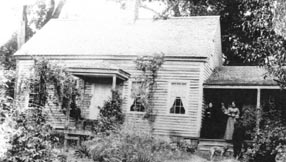
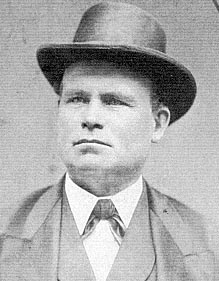
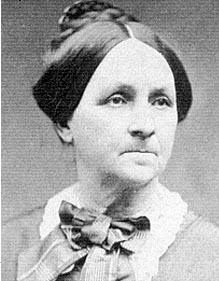
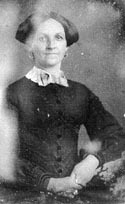
Top
photos of David Clark and his wife
taken circa 1850, probably Lowell,
MA. Pictures below taken after they
removed to California including the
homestead during the 1860's. Information
and photos courtesy of Roena D. Wilson
and Penny Vail. Additional Information
on the S.S. North America from the
Maritime Heritage Website
 View all biographies as a pdf file